Give the city a rule that changes what the characters can do. Show the rule through a route, a barrier and a consequence. Use repeat views and a recognisable sound to help the audience notice what changes. Test the sequence in a rough cut before generating streets, crowds or wide shots.
Start with something the city makes happen
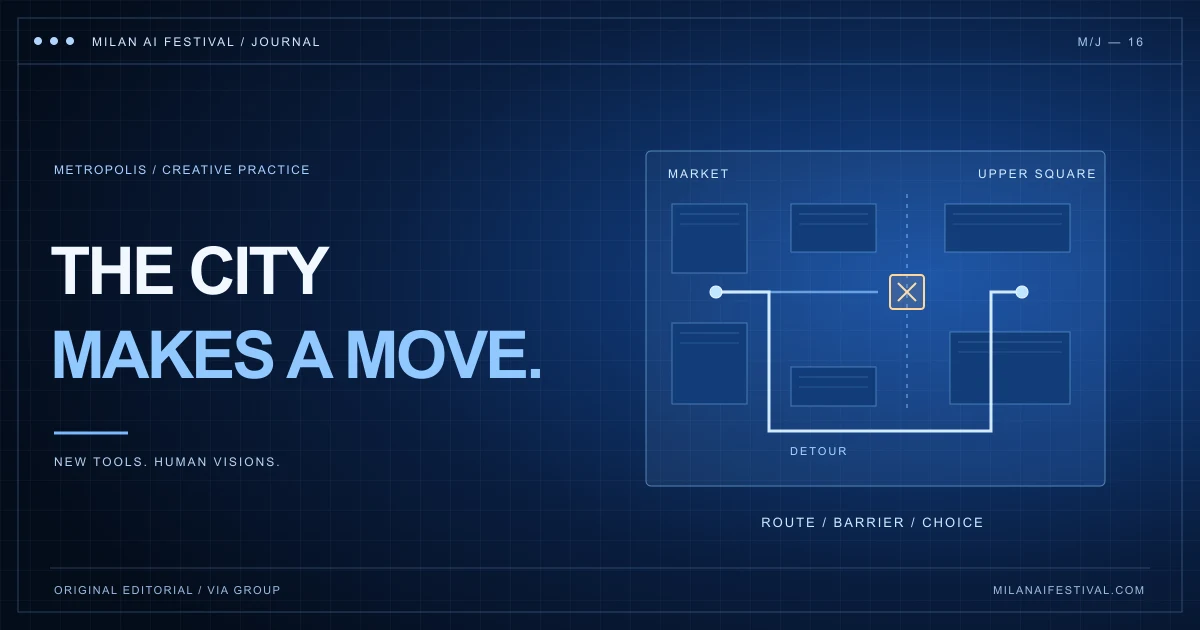
Write one sentence that connects a condition of the city to a choice. In a fictional exercise, a municipal lift closes just as a bicycle courier and a worker with a loaded trolley reach the lower level. The lift is the only assisted crossing between the market and a hill district. The courier and the worker now face different journeys, even though they want to reach the same square.
At the start, show what the crossing normally allows. At the turn, let the closure change a specific action. At the end, show the result in the district on the other side. If moving the story to any other city would leave the same choices and consequences, identify what the location could change. A public stair, an operating timetable or an entrance with limited access can do more story work than a new skyline.
The rule can belong to a recognisable city or an invented one. For a real setting, verify routes, opening hours and what a location actually looks like before presenting a detail as factual. If your film changes those conditions, use the synopsis or programme note to say what you imagined.
Map the crossing from two points of view
Kevin Lynch’s The Image of the City studies how people perceive and remember city form. Borrow that concern for the edit. What can a viewer recognise from each character’s point of view? A route you know from a top-down reference image may be difficult to infer from a close-up at street level. Kevin Lynch, The Image of the City
For the lift story, sketch the market, lift doors, ramp and upper square. Mark where the trolley can turn and where the cyclist can see the square. Choose a persistent feature, such as the handrail above the doors, and make it visible from two positions. Then show the detour from the viewpoint of someone who has to take it.
On a simple shot list, write what becomes possible or impossible at each stop. For one beat, try a wide view connecting the doors to the market. For another, frame the trolley’s front wheels meeting the bottom of the steps. The closer view gives the same piece of geography a different meaning. How to keep spaces consistent between AI shots
Let the city announce a change through sound
A soundwalk is an exercise in deliberate listening to a place. The World Soundscape Project’s handbook describes using a route to draw attention to its acoustic features. Try listening from two positions near a crossing you can safely access. Note which sounds travel between them, which become distinct only up close, and what comes to the foreground during a pause. World Soundscape Project handbook on soundwalks
In the fictional lift sequence, a soft relay click followed by a rising motor can establish the lift’s usual rhythm. When the doors close for the evening, hold the closed doors through the moment when the motor would normally return. Let the market continue behind the pause so the viewer can hear which part of the city has stopped.
Compare two cuts of that beat. In one, carry the market calls into the detour to imply that the route is still nearby. In the other, let the sound fall behind the character at the first corner. Decide how far the viewer should feel from the original crossing before choosing what to record or generate. Prompt2Screen’s five-pass sound design workflow
Test the story before generating the whole city
Assemble three rough beats with stills or simple blocks. First show the ordinary crossing, then show the barrier, then show a decision someone makes because of it. Add a few seconds of temporary environmental sound and play the sequence without explaining the map.
Ask a new viewer three questions. Where did each person want to go? What changed about the trip? Which image or sound told them? If they know the lift closed but cannot tell why that matters, spend a shot on the ramp or on what the trolley is carrying. If they can follow the choice but lose the route, repeat the same landmark from a second view.
When you move to generated shots, keep the working route and approved frames beside the timeline. At each cut, check the direction of travel, the condition of the barrier and how far the character has progressed. A single revised insert can solve a problem that would otherwise lead you to rebuild the block. Keep a record of the changes you make and why. How to document the creative decisions in an AI film
Where this fits in Milan’s competition
Milan AI Festival’s Best AI Metropolis category is for stories centred on a city, whether real or imagined. It accepts any genre and lists a maximum runtime of 15 minutes. If you are choosing between Metropolis and Design & Architecture, ask whether your film’s central action depends on how the city operates or whether the main subject is a designed object, building or interior. Compare the published descriptions and use the festival’s official entry listing for current rules. Milan AI Festival competition categories · How to choose a Milan submission category